What was DRS in F1, and what replaced it in 2026?
DRS was F1's overtaking aid from 2011 to 2025. How it worked, why it went, and how the 2026 adjustable wings and Overtake mode replace it.
Researched with AI assistance and checked against the sources below.
DRS, the Drag Reduction System, was a flap in the rear wing of a Formula 1 (F1) car. In a race, a driver less than one second behind another car could open it on set straights. The wing then made less drag, the car went faster, and a pass became easier. DRS ran from 2011 to the end of 2025.
DRS is gone in 2026. The current Sporting Regulations, Section B, Issue 09 of 1 October 2026, do not mention it.1 Article B7 splits its job between two systems:
- Driver Adjustable Bodywork. The front and rear wings both have flaps that open on set straights. Every driver can use them, not only a driver who is close behind another car.
- Overtake mode. A driver close enough behind another car at a detection line may use more electric power at high speed, until the car next crosses an activation line.
The rules here are as of 18 October 2026. The technical rules are Section C, Issue 20 of 5 August 2026.2 Both were the latest issues on the regulations page of the Fédération Internationale de l’Automobile (FIA) on that date.3
What does DRS stand for?
DRS stands for Drag Reduction System. The 2011 Technical Regulations did not use the name. They called the system “driver adjustable bodywork”.4 By 2025, the Technical Regulations headed the article “Drag Reduction System (DRS)”.5
A rear wing pushes the car down onto the track. That force, downforce, gives the tires more grip in corners. The cost is drag, the air resistance that slows the car on a straight. Drag depends on the shape of a body, its angle to the airflow and the square of its speed.6 Change the angle of the wing, and you change both its downforce and its drag.
DRS let the driver lower that angle on a straight, where the car needs little downforce, and raise it again before the next corner.
How did DRS work?
The 2025 Technical Regulations, Issue 3, describe the last version of DRS in Article 3.10.10.5 The rear wing had two elements. The rear one, the flap, could rotate about a fixed axis while the car was moving:
- Two positions only. The flap was either closed or open. It had to return to exactly the same closed position each time.
- Fast. The change from one position to the other had to take less than 400 milliseconds.
- Driver command, standard electronics. The driver gave the command, and the control electronics specified by the FIA carried it out.
- Fail-safe. If the system failed, the flap had to return to its closed position.
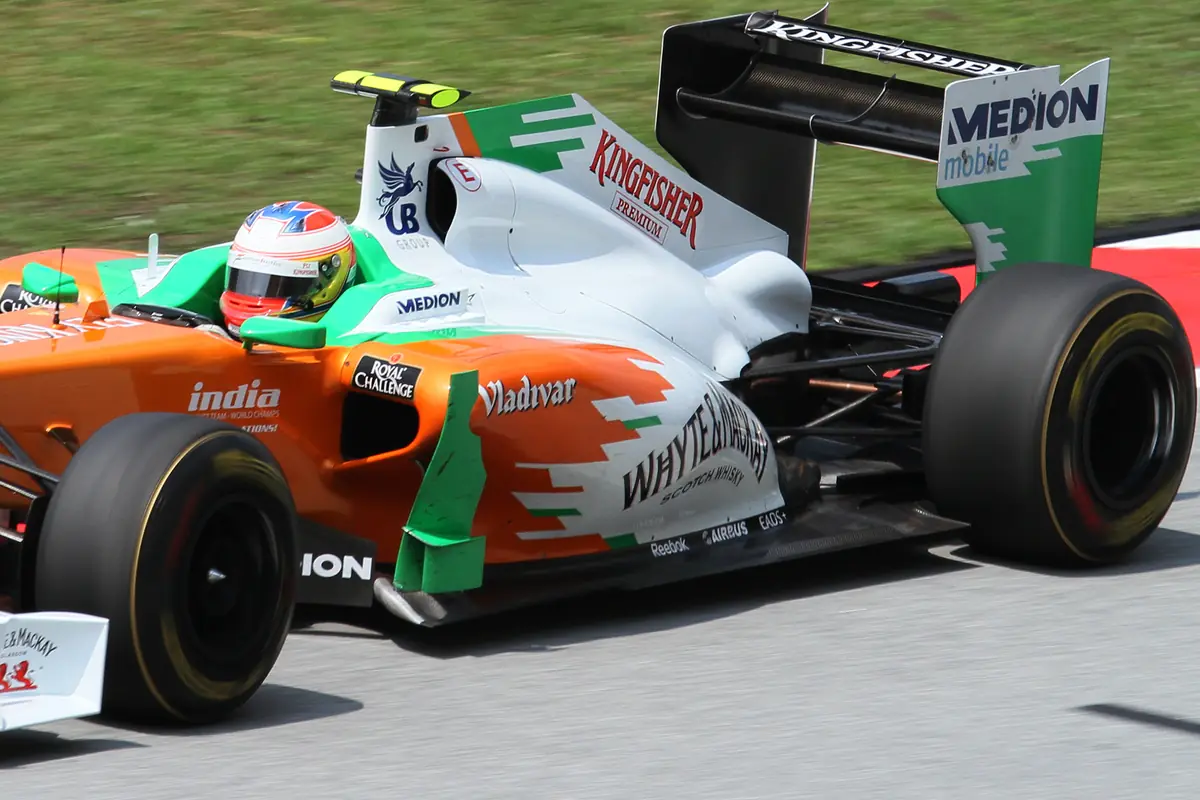
Fig. 1 A 2011 car in practice at Sepang with its DRS flap open. Photo: Morio, Wikimedia Commons (opens in a new tab), CC BY-SA 3.0 (opens in a new tab), cropped to 3:2 and resized.
Opening the flap lowered its angle and widened the slot between the two elements. The wing then made less downforce and less drag. The rules limited that slot at its narrowest point. In 2011 it could be at most 15 mm with the flap closed and 50 mm with it open (Article 3.10.2).4 In 2025 the limits were 13 mm closed (Article 3.10.1) and 85 mm open (Article 3.10.10).5
The regulations set the mechanism and the gap, not a speed gain. Any speed figure you read for DRS is an estimate, not a rule.
When could a driver use DRS?
The Sporting Regulations set the use rules. The last version is Article 22.1 of the 2025 Sporting Regulations, Issue 5.7 In a race or a sprint, four conditions applied:
- Activation zones only. The flap could open only in pre-determined zones around the circuit.
- Not on the opening lap. The driver had to complete one lap after the start, or after a safety car period, before using it.
- Within one second. The system was enabled only if the driver was “less than one (1) second behind another” car at a detection point. A gap of exactly one second did not qualify.
- Closed on braking. The control electronics closed the flap the first time the driver braked after opening it.
The driver could open the flap only after the control electronics showed that it was enabled. The Race Director could disable DRS at any time. The rule names poor visibility and yellow flags in an activation zone as reasons.7
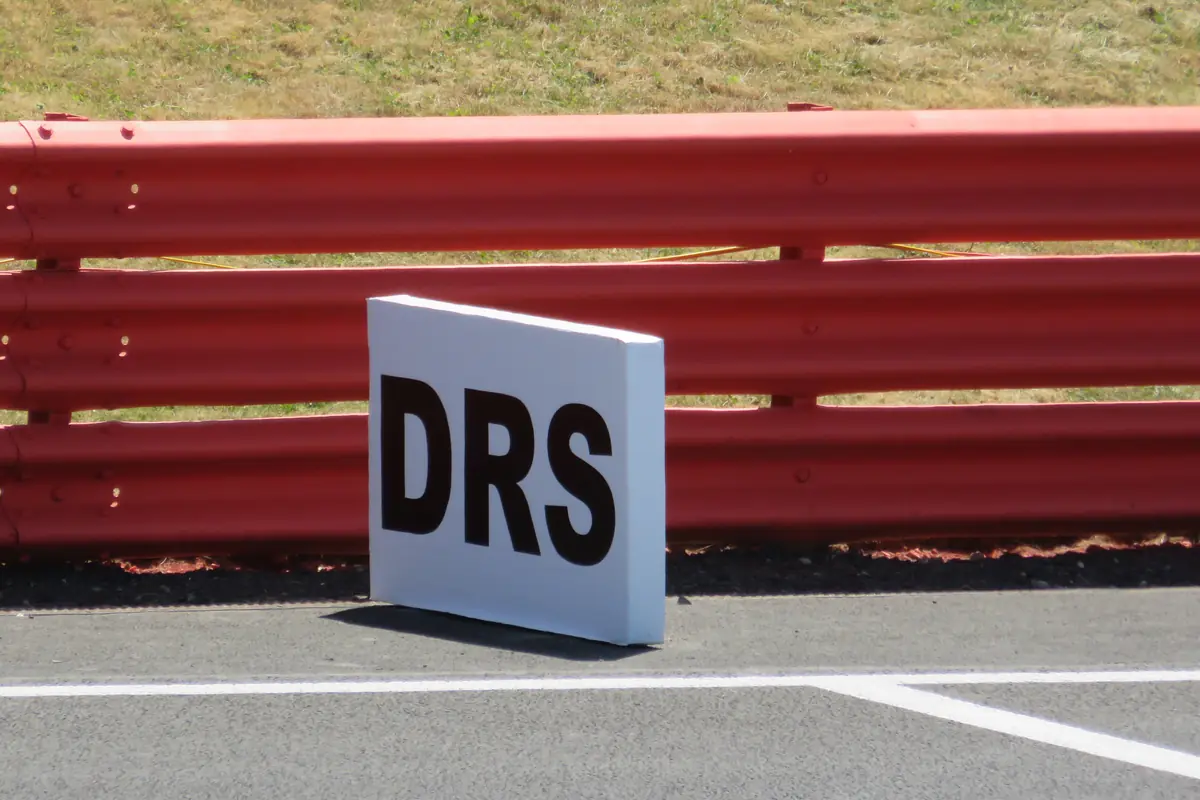
Fig. 3 A DRS board beside the track, 2018 British Grand Prix. Photo: Jen_ross83, Wikimedia Commons (opens in a new tab), CC BY 2.0 (opens in a new tab), cropped to 3:2 and resized.
The one-second condition is written for sprints and races only. The zone condition applies to every session. So in practice sessions, qualifying and sprint qualifying, any driver could open the flap in an activation zone.7 If the Race Director disabled DRS during a qualifying period, it stayed off until that period ended.
The rules changed over the years. In 2011, Article 3.18 of the Technical Regulations held the use rules. The driver could open the flap at any time before the race. In the race, the driver had to wait for “a minimum of two laps” after the start or a safety car period.4 By 2025 that wait was one lap.7 The one-second gap, the brake cutoff and the FIA’s power to adjust the time gap were all in the 2011 text.
How many times could a driver use DRS?
The 2025 rule sets no limit on the number of uses in a race. A driver could use DRS in every activation zone, on every lap, when the conditions above were met.7 The rule calls them pre-determined zones for each circuit.
How does a slipstream relate to DRS?
A slipstream, or tow, is the pocket of moving air behind a car. A car that follows closely meets air that is already moving forward with the car ahead. It feels less air resistance, so it can reach a higher speed on a straight. Drag grows with the square of speed, so the tow helps most at high speed.6
The same wake hurts in corners. The disturbed air behind a car gives the follower’s wings less downforce. The 2026 Technical Regulations name this problem directly. Article C3.2.1 sets the aerodynamic objective “to promote close racing by minimising the aerodynamic performance loss when one car follows another.”2
DRS added to the tow. The follower lost grip in the corners, closed up on the straight in the slipstream, then opened the flap for more speed.
Why was DRS controversial?
DRS helped one car only, by design. The 2025 rule states its purpose: “the sole purpose of improving overtaking opportunities”.7 The car in front could not use it to defend, unless it was itself less than one second behind another car.
Two effects follow from that rule. This is our reading of the rule text, not an FIA statement:
- Easy passes. On a long straight, the following car could pass before the braking zone. The defender then had little chance to respond.
- DRS trains. When several cars ran in a line, each less than one second behind the next, every car except the first got DRS. Each gained the same help, so the line could stay in the same order for many laps.
The rule also let the FIA tune the effect. After consulting the teams, it could adjust the one-second gap “to ensure the stated purpose of the adjustable bodywork is met”.7
Why was DRS removed for 2026?
The 2026 cars are a new design with a new power unit. The FIA presented the regulations on 6 June 2024. It listed “active aerodynamics to suit the energy management requirements of new power units” as a key change.8 It described two new features: “active aerodynamics to achieve very low drag on the straights”, and a “Manual Override” system, now called Overtake mode, to “provide drivers with an on-demand burst of battery power when close enough to the car ahead”.8
We found no FIA statement that gives a single reason for dropping DRS. The FIA’s 2024 statement points to two jobs. Low drag on the straights is now for every car, as part of the energy management of the new power unit. Help for the chasing car now comes from electric power, not from the wing. Our reading is that a wing for the chaser alone no longer fit that design.
The new power unit leans much more on its electric motor. The rules call the electric drive the ERS-K, the kinetic energy recovery system: the motor-generator, its control unit and their cables. Its power may not exceed 350 kW (Article C5.2.7).2 In 2025 the motor-generator was limited to 120 kW (Article 5.3.3).5 Formula 1’s own explainer says the electric output has tripled.9
What replaced DRS? Active aerodynamics
Article B7.1 of the Sporting Regulations calls the new wings “Driver Adjustable Bodywork”.1 The Technical Regulations give each moving wing two fixed positions:2
- Corner Mode. The default position. Formula 1’s explainer says the flaps stay shut in the corners “to maintain grip”.9
- Straight Mode. A lower angle that cuts drag on a straight.
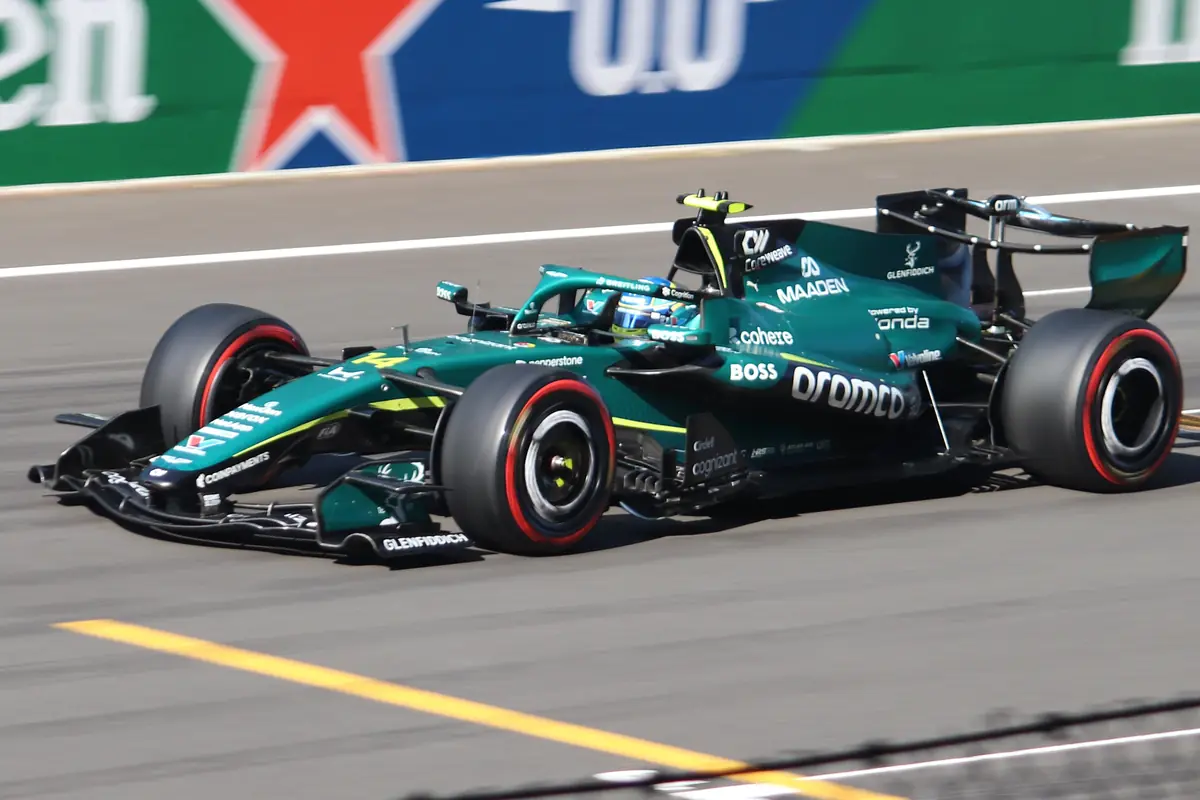
Fig. 4 A 2026 car on a straight in China, rear-wing flaps open. Photo: Liauzh, Wikimedia Commons (opens in a new tab), CC BY 4.0 (opens in a new tab), cropped to 3:2 and resized.
Four points set it apart from DRS:
- Both wings move. The front-wing flaps (Article C3.10.10) and the rear-wing flap (Article C3.11.6) can both change angle. With both in Straight Mode, the system is “fully activated”.1
- Every driver, every lap. Article B7.1.2 has no gap condition. A driver may open the wings in an Activation Zone when the control electronics show they are enabled.12 Formula 1’s explainer says the low-drag mode is “available to every driver, on every lap”.9
- Zones set in advance. The FIA gives the teams the Activation Zones for each circuit at least four weeks before the event. A sign marks the start of each zone.1
- Closed outside the zones. The flaps may leave Corner Mode only when the car is stationary or fully inside an Activation Zone. Each change takes no more than 400 milliseconds, and a failure returns the flaps to Corner Mode.2
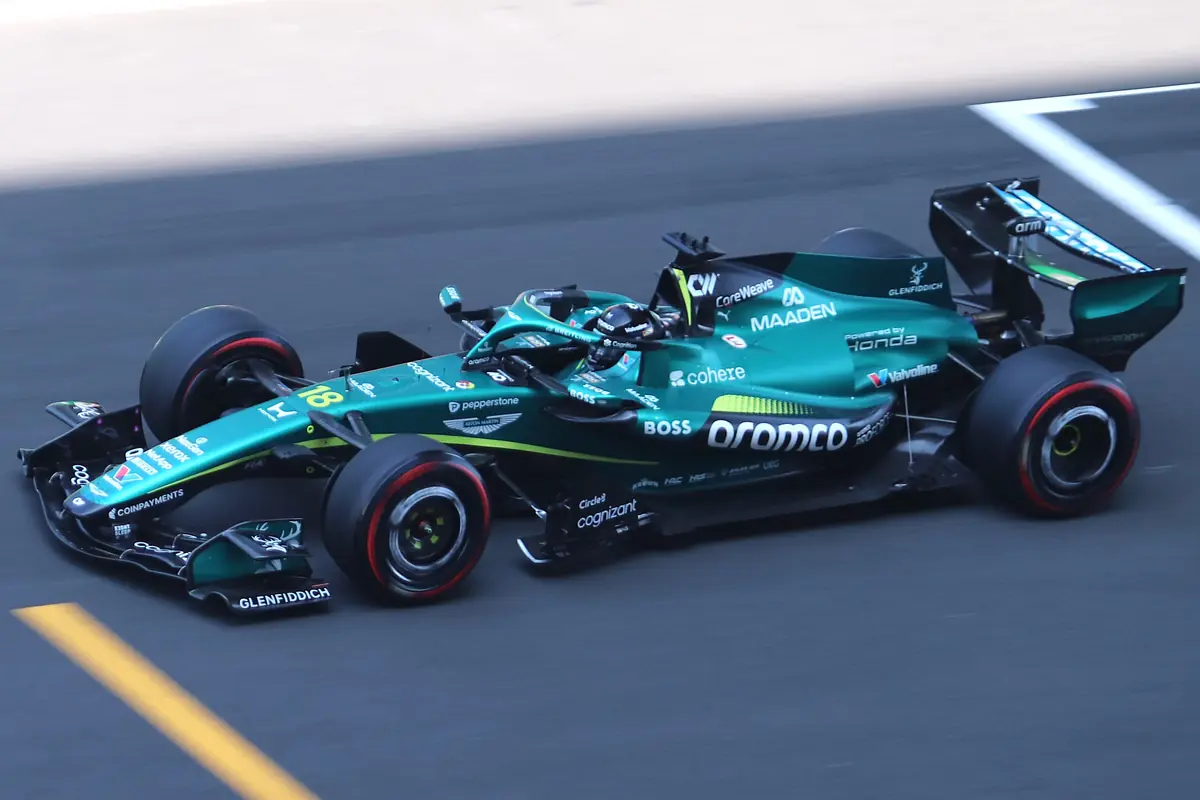
Fig. 5 The same model at the same event, rear-wing flaps closed. Photo: Liauzh, Wikimedia Commons (opens in a new tab), CC BY 4.0 (opens in a new tab), cropped to 3:2 and resized.
Unlike the DRS rule, the Sporting Regulations set no lap wait for the wings. They say only that the driver may use them when they are enabled. The rule text does not say when the FIA enables them in a race.
Bad weather has its own rule. The Race Director may declare “Low Grip Conditions” (Article B1.5.11).1 Then only partial activation is allowed, in separate Low Grip Activation Zones. The front wing may go to Straight Mode, but the rear flap stays in Corner Mode (Articles B7.1.1 and B7.1.2).1
What replaced DRS? Overtake mode
The advantage for the chasing car now comes from the battery. The Technical Regulations define “Overtake” as a mode “that allows additional Recharge and an alternative ERS-K maximum power profile”.2 In plain terms, a driver in Overtake mode may recover more energy and use more electric power at high speed.
Without Overtake mode, the electric power limit falls as the car gets faster. With it, the limit stays higher for longer. Article C5.2.8 gives both limits as formulas, under the 350 kW cap of Article C5.2.7.2
Fig. 6 Electric (ERS-K) power limit by speed, 2026 Source: worked from FIA Section C, Arts. C5.2.7 and C5.2.8.2
On these two curves, up to 290 km/h, both formulas reach the 350 kW cap, so Overtake mode makes no difference to the limit there. Two other curves exist. In a race or sprint, a 250 kW limit can apply on circuit sectors the FIA names, and separate curves apply in Low Grip Conditions (Article C5.2.8, iii and iv).2 The FIA may adjust these limits for a circuit, only to keep the top speed compatible with the circuit’s design (Article B7.2.1).1
In a race or sprint, Articles B7.2.2 and B7.2.3 set these rules:1
- Detection Line. The driver must be less than the “Detection Gap” behind another car when crossing the Detection Line. A solid yellow line across the track and a sign normally mark it.
- Activation Line. Overtake mode turns on at the Activation Line. It turns off at the next Activation Line if the driver was more than the Detection Gap behind at the Detection Line.
- Not before the leader. At the start, and when a suspended race resumes, Overtake mode is disabled. It is enabled when the leader first crosses the Detection Line.
The rules do not print the Detection Gap. The FIA sets it for each event, with the positions of the two lines (Article B7.2.1).1 For the 2026 Italian Grand Prix, the FIA set it at 1.0 second.10 Formula 1’s explainer also gives one second, at a single detection point.9
Overtake mode is also disabled when the Safety Car is out, in Low Grip Conditions, and whenever the Race Director decides that safety requires it (Article B7.2.2).1 In practice and qualifying, it is active at all times when enabled, for every driver.1
Formula 1’s explainer also describes a separate “Boost” function. Drivers can use it at any point on the lap, to attack or to defend.9 Section C defines Boost as “a driver activated mode that maintains or increases the ERS-K power demand”.2
DRS and the 2026 systems side by side
| DRS (2025) | Driver Adjustable Bodywork (2026) | Overtake mode (2026) | |
|---|---|---|---|
| What changes | Rear-wing flap angle | Front- and rear-wing flap angles | Electric power limit and energy recovery |
| Who may use it in a race | A driver less than 1 s behind another car at a detection point | Every driver | A driver less than the Detection Gap behind at the Detection Line |
| Where | Activation zones | Activation Zones | Anywhere, from one Activation Line to the next |
| Practice and qualifying | Every driver, in the zones | Every driver, in the zones | Every driver, at all times when enabled |
| Low grip or bad weather | Race Director may disable it | Front wing only, in Low Grip Activation Zones | Disabled |
| Ends | First time the driver brakes | Must close before the zone ends | At the next Activation Line, unless within the gap again |
| Rule | 2025 Sporting Art. 22.1; Technical Art. 3.10.10 | Section B Art. B7.1; Section C Arts. C3.10.10 and C3.11.6 | Section B Art. B7.2; Section C Art. C5.2.8 |
Rules as of 18 October 2026 (Section B Issue 09, Section C Issue 20). The FIA sets the zones and the Detection Gap for each event.
What this means when you watch a race
The wings now open on every car, on every lap, so an open rear wing no longer tells you who is attacking. The attack comes from Overtake mode. A car that was close enough at the Detection Line keeps more electric power at the top of each straight, where the power of the car ahead tapers off, unless that car is also in Overtake mode.2
The FIA sets the zones and the lines for each circuit, and it can amend them during an event.1 To learn how passes on track turn into a championship, read our guide to the F1 points system. For how the wings and the electric power add up on a straight, see our guide to F1 top speed.
Sources
- 1FIA, 2026 F1 Regulations, Section B: Sporting, Issue 09, 1 October 2026 (opens in a new tab). Accessed .
- 2FIA, 2026 F1 Regulations, Section C: Technical, Issue 20, 5 August 2026 (opens in a new tab). Accessed .
- 3FIA, Regulations: Formula One World Championship (opens in a new tab). Accessed .
- 4FIA, 2011 Formula One Technical Regulations, 30 June 2011 (opens in a new tab). Accessed .
- 5FIA, 2025 Formula 1 Technical Regulations, Issue 3, 7 April 2025 (opens in a new tab). Accessed .
- 6NASA Glenn Research Center, The drag equation (opens in a new tab). Accessed .
- 7FIA, 2025 Formula 1 Sporting Regulations, Issue 5, 30 April 2025 (opens in a new tab). Accessed .
- 8FIA, A new era of competition: FIA showcases future-focused Formula 1 regulations for 2026 and beyond, 6 June 2024 (opens in a new tab). Accessed .
- 9Formula 1 (series explainer), Everything you need to know about the new F1 rules for 2026, 17 December 2025 (opens in a new tab). Accessed .
- 10FIA, 2026 Italian Grand Prix, Power Unit Information (Race Director, Document 8), 3 September 2026 (opens in a new tab). Accessed .