Used car inspection checklist: what to check before you buy
A used car inspection checklist you can work through without tools: records, body, tires, cabin, engine bay and test drive, and what to leave to a mechanic.
Researched with AI assistance and checked against the sources below.
A walk-around cannot tell you everything about a used car, but it shows whether the car is worth a mechanic’s time. This checklist covers condition, not price. Online rules of thumb about how much to spend are not advice for your situation. For the steps from shortlist to signature, see our guide to buying a used car.
Before you see the car
- Recalls. Ask the seller for the vehicle identification number (VIN). A recall is a free remedy for a safety defect or a failed safety standard.1 Look the VIN up with NHTSA in the US, Transport Canada,2 or the UK MOT history, which shows recalls for some makers.3
- A cool engine. Ask the seller not to run the engine before you arrive. You check the coolant level on a cool engine, and a hot engine bay can burn you.4
Paperwork and records
- History report. It may list accidents and flood damage, but it typically does not list mechanical problems. The US Federal Trade Commission (FTC) says it is no substitute for an independent inspection.5
- Mileage. Compare the odometer with the title, the service records and any oil-change stickers on the windows, door frames or under the hood.6 Each service record should show a date, the mileage and the work done. The UK MOT history shows the mileage at each test.3 To judge the number itself, read what mileage means.
- The Buyers Guide (US dealers). A dealer must display one on every used car it offers for sale.7 It says whether the car is sold “as is” or with a warranty, and tells you to ask for an independent inspection.5
Outside, in daylight
- Panels. If a panel’s color, shine or gaps differ from its neighbors, ask why, and look for a repair in the history report.
- Rust. Check the wheel arches, the sills and the bottoms of the doors. The FTC lists rust around the doors as one sign of flood damage.8
- Glass and lights. Look for chips and cracks. Check every light, and ask the seller to press the brake pedal.
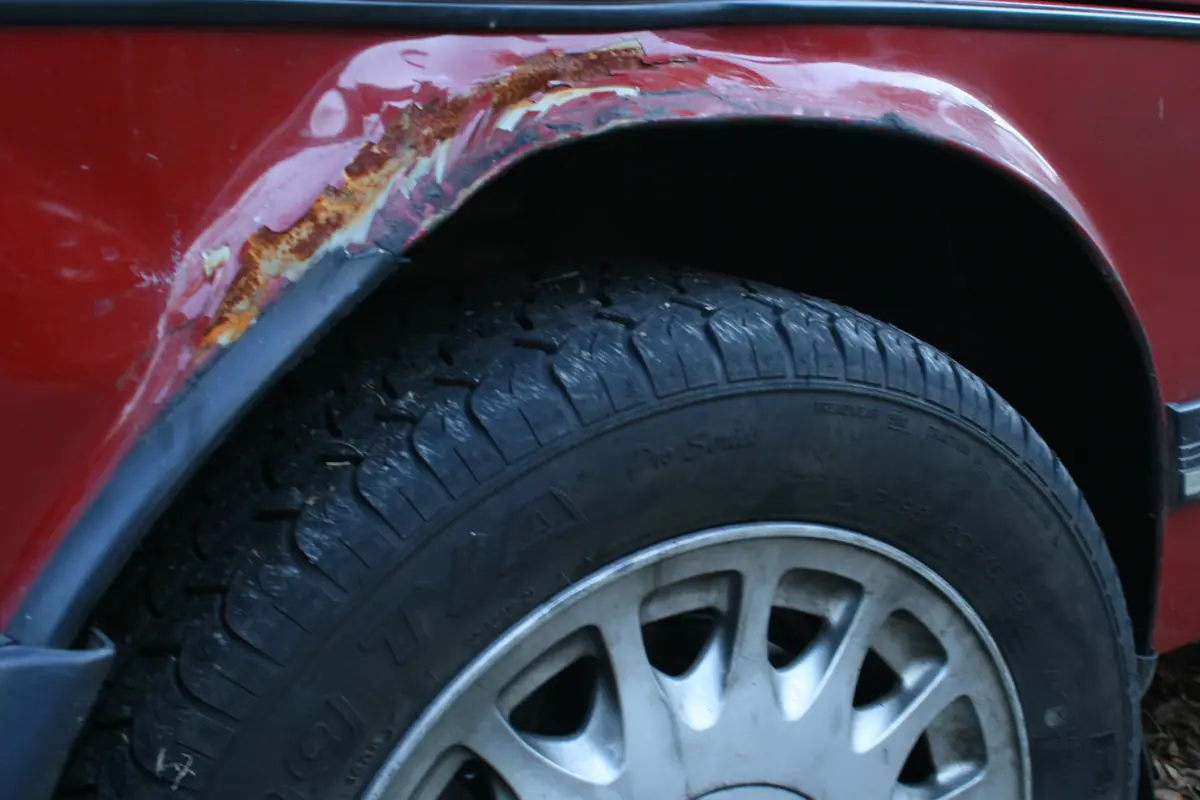
Fig. 1 Rust lifting the paint on a wheel arch. Photo: Ildar Sagdejev (Specious), Wikimedia Commons (opens in a new tab), CC BY-SA 4.0 (opens in a new tab), cropped to 3:2 and resized.
Tires
- Tread depth. NHTSA calls a tire unsafe once its tread is worn to 2/32 of an inch (about 1.6 mm), and due for replacement once the tread is level with its raised treadwear indicators.9
- Wear and damage. Compare the inner edge, center and outer edge of each tire, and look for cuts, cracks and bulges. NHTSA lists irregular wear from underinflation or overloading as a reason to stop using a tire.9
- Age. You cannot judge a tire’s age by eye. Find the DOT Tire Identification Number on the sidewall, on one side or both: its last four digits give the week and year it was made, so 3107 means the 31st week of 2007. As of October 2026, NHTSA notes that some vehicle and tire makers recommend replacing tires six to 10 years old, whatever the tread.9
- Original tires. If the odometer shows 20,000 miles or less, NHTSA says the car should still have its original tires.6
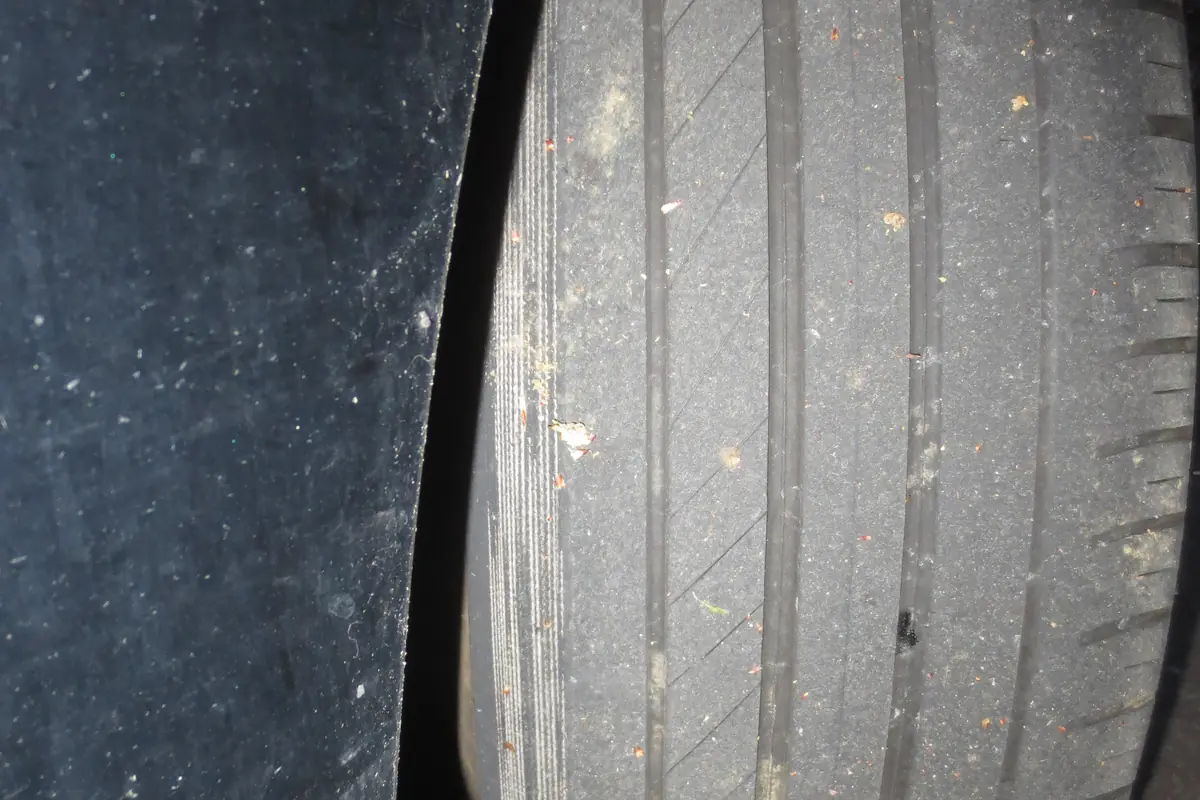
Fig. 2 A tire worn to the cords on one edge. Photo: Paul.schrepfer, Wikimedia Commons (opens in a new tab), CC BY-SA 4.0 (opens in a new tab), cropped to 3:2 and resized.
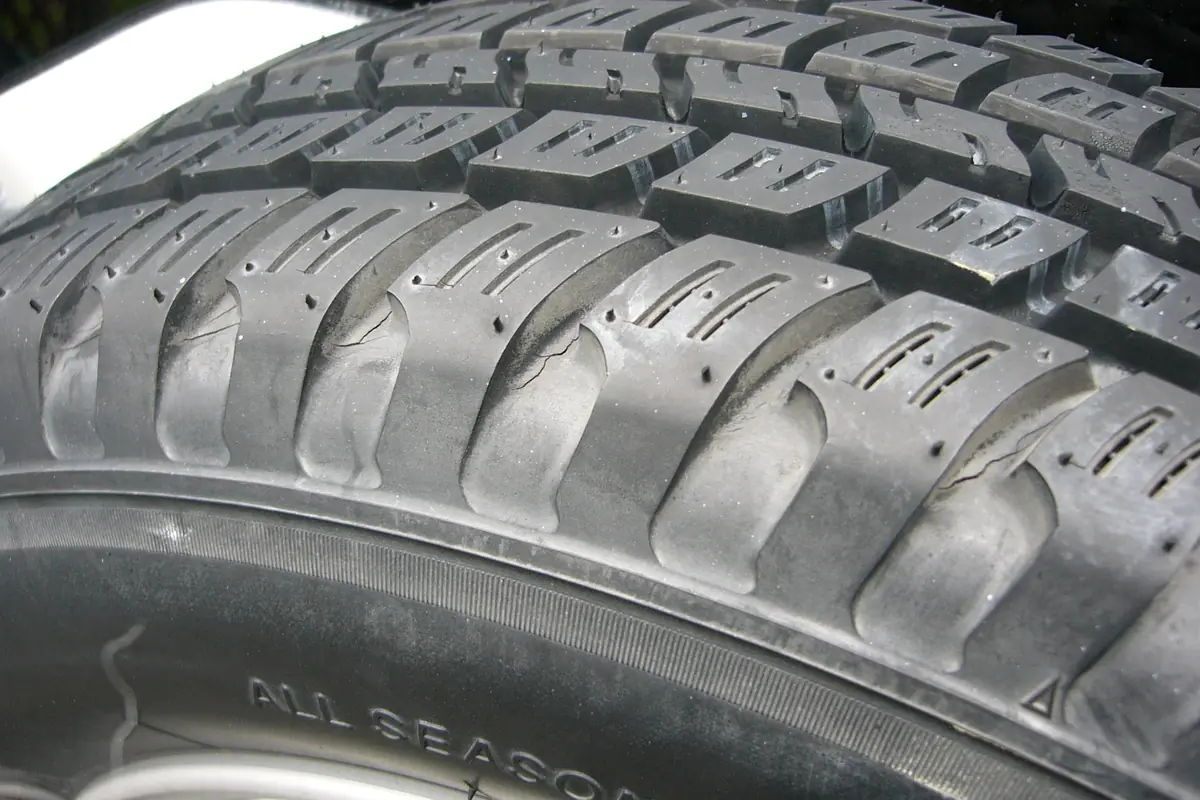
Fig. 3 Cracks in the rubber between the tread blocks. Photo: Ken T1381, Wikimedia Commons (opens in a new tab), CC BY-SA 3.0 (opens in a new tab), cropped to 3:2 and resized.
Inside the car
- Flood signs. Look for mud or sand under the seats or dashboard, and carpet that is loose, stained or mismatched. Smell for mold, decay or strong cleaning products in the cabin and the trunk.8
- Pedal wear. The gas, brake and clutch pedals should look worn in line with the odometer.6
- Controls. Try the windows, locks, seats, heater, air conditioning, screen and cameras.
- Warning lights. Start the engine and note any light that stays on. If it is the airbag light, leave it to the mechanic.
Under the hood, engine off and cool
Do this before anyone starts the engine. Look, but do not touch anything or open any cap.
- Coolant. Read the level through the side of the reservoir. One maker’s manual puts it between the F and L marks on a cool engine. It warns never to remove a cooling system cap when hot, because scalding coolant can spray out.4
- Hoses and leaks. Note any swollen or worn hose,4 and any wet oil or fluid on and around the engine.
- Hybrids and electric cars. High-voltage cables are usually orange.10 Do not touch them, or any other cable or part. The US Department of Energy suggests you ask about battery life and warranties.10
On the test drive
With the radio off, notice these, and write them down after you stop:
- how the engine starts and idles
- any knock, squeal, clunk or grinding noise
- vibration through the steering wheel or the seat
- a pull to one side on a straight, level road, which can point to wheel alignment9
- gear changes that slip, jerk or hesitate
- smoke from the exhaust
What only a mechanic can check
The FTC advises an inspection by an independent mechanic, even on a car the dealer has “certified”, with a written report that includes the VIN and a repair estimate. A safety inspection is narrower: it usually covers only what makes a car unsafe to drive.5
In the UK, the MOT checks that important parts meet legal standards. It does not cover the condition of the engine, clutch or gearbox.11 A recent pass is not a mechanical inspection.
Do not test or take apart the brakes, steering, suspension, airbags, fuel system or an electric car’s high-voltage system. Do not jack up the car or crawl under it. A qualified mechanic checks these parts.
Red flags: when to walk away
- The seller refuses an independent inspection. The FTC says to consider another dealer.5
- The car shows signs of flood damage.8
- The mileage does not match the title, the records or the wear.6
- The seller will not put a promise in writing. The Buyers Guide warns that spoken promises are hard to enforce.5
Sources
- 1NHTSA, Check for recalls: vehicle, car seat, tire, equipment (opens in a new tab). Accessed .
- 2Transport Canada, Stay informed about recalls of vehicles, tires and child car seats (opens in a new tab). Accessed .
- 3GOV.UK, Check the MOT history of a vehicle (opens in a new tab). Accessed .
- 4Mazda, 2025 CX-5 owner’s manual: Inspecting coolant level (opens in a new tab). Accessed .
- 5US Federal Trade Commission, Buying a used car from a dealer, April 2024 (opens in a new tab). Accessed .
- 6NHTSA, Odometer fraud (opens in a new tab). Accessed .
- 7US Code of Federal Regulations, 16 CFR 455.2, consumer sales: window form (opens in a new tab). Accessed .
- 8US Federal Trade Commission, How to steer clear of a flood-damaged car, 15 November 2022 (opens in a new tab). Accessed .
- 9NHTSA, Tires (TireWise) (opens in a new tab). Accessed .
- 10US Department of Energy, Alternative Fuels Data Center, Maintenance and safety of electric vehicles (opens in a new tab). Accessed .
- 11GOV.UK, Getting an MOT: how the MOT test works (opens in a new tab). Accessed .