What does the check engine light mean?
The check engine light means your car's OBD system found a fault. See what steady and flashing mean, common causes, and what a code reader can tell you.
Researched with AI assistance and checked against the sources below.
What does the check engine light mean? It means your car’s on-board diagnostics (OBD) computer has found a fault in the engine or its emission controls.1 Sometimes the cause is small, such as a loose fuel cap.2 A flashing light is different: it signals a severe problem, such as an engine misfire that can damage the catalytic converter.2
What the check engine light is
The light’s formal name is the malfunction indicator light, or MIL. You will also see it called the malfunction indicator lamp. It is the warning part of the OBD system, a computer built into every 1996 and newer car and light truck in the US. The 1990 Clean Air Act required this system.1 Today’s version is called OBD-II, for second-generation on-board diagnostics.2
US rules say the system must detect malfunctions in the emission control system, store a trouble code for each one, and alert the driver.3 In the European Union, the regulation behind the Euro 5 and Euro 6 emission standards also defines OBD. It is a system that identifies “the likely area of malfunction” with fault codes stored in a computer memory.4
When you switch on the ignition, the light should come on briefly. It should then stay off while you drive, as long as the system finds no problem.2
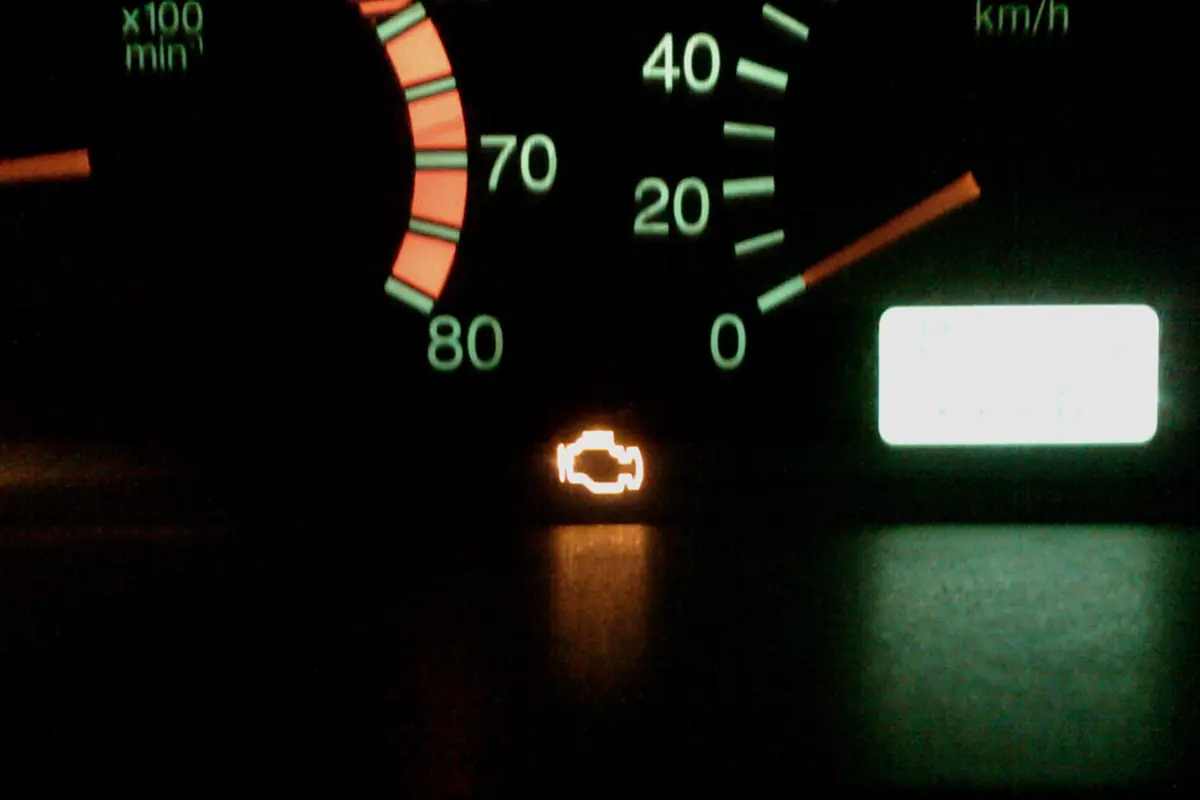
Fig. 1 The check engine light, lit with the engine at idle. Photo: .kkursor, Wikimedia Commons (opens in a new tab), CC0 1.0 (opens in a new tab), cropped to 3:2 and resized.
Steady or flashing: what each means
A steady light means the OBD system has found a problem. An archived EPA guide says the car may have a condition that wastes fuel, shortens engine life or causes excess air pollution. It calls this no cause for panic, but a sign to have the car seen soon.2
A flashing light is more urgent. An archived EPA guide says it means a severe engine problem, such as a misfire that can damage the catalytic converter, is happening now. Have it dealt with as soon as possible.2 A misfire is when the fuel in a cylinder does not burn as it should. The catalytic converter is the part of the exhaust that treats pollutants.
Can you keep driving?
With a steady light, usually yes, but have the car checked soon.2 With a flashing light, the archived EPA guide says you can still drive safely, but you should keep your time on the road short. Avoid high speed and heavy loads, such as towing.2 Mazda’s manual for the 2025 CX-5 says not to drive at high speed when the light stays on or flashes, and to see a dealer as soon as possible.5 It goes further: do not drive with any sign of engine malfunction, because the catalytic converter can get very hot and be damaged.6 Your own manual is the rule for your car.
Common causes
The EPA says the faults that turn on the light come most often from the catalytic converter or an oxygen sensor.7 Other common causes:
- A loose or missing fuel cap. The OBD system can detect one.2 US rules require model year 2017 and later cars to detect a fuel-vapor leak as small as 0.020 inch (about 0.5 mm). The certification test in those rules places one test leak at the fuel cap or between the cap and the tank.3
- A very low fuel level. Mazda lists a nearly empty tank as one cause in the CX-5.5
- An engine misfire, which the EPA says can lead to severe or permanent engine damage.2
- A problem in the engine’s electrical system, or another fault in the emission controls.5
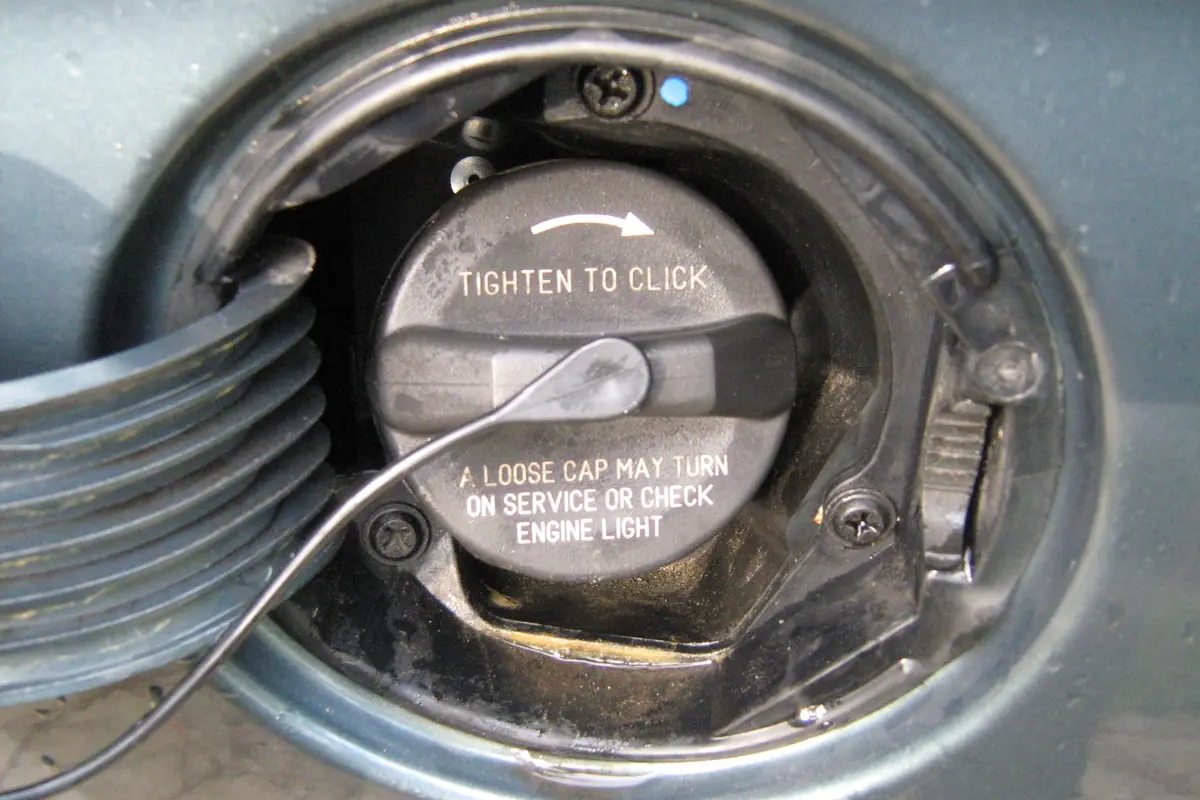
Fig. 2 The fuel cap’s own warning about the light. Photo: Christopher Ziemnowicz, Wikimedia Commons (opens in a new tab), Public domain (opens in a new tab), cropped to 3:2 and resized.
An early fix can be cheaper. The EPA gives the example of a failing oxygen sensor: replacing it in time can save the cost of a new catalytic converter later.1
In the US, check the federal emissions warranty before you pay for a repair. Under it, the manufacturer of a car or light truck must repair or replace a defective emission part free of charge for 2 years or 24,000 miles, whichever comes first. The EPA’s list of these parts includes the oxygen sensor and the fuel filler cap. The catalytic converter, the engine’s emissions computer and the OBD computer are covered for 8 years or 80,000 miles, on the same basis. These terms come from the EPA’s October 2015 fact sheet and match the current federal rule (both checked 18 October 2026); your warranty booklet gives your car’s coverage.89
Will the light turn off by itself?
It can. When the problem goes away, for example after you tighten a loose fuel cap, the OBD computer turns the light off itself. The EPA says the car then needs no special attention unless the light comes back.2 If it is still on after a few short trips, have the car serviced soon.2
The system can also store a code for an intermittent fault without turning on the light. If the fault does not return within a certain number of trips, the code is cleared.10
What a code reader can and cannot tell you
OBD-II cars have a data link connector, usually under the dashboard on the driver’s side.10 A scan tool plugged in there reads the stored diagnostic trouble codes (DTCs). It also reads the readiness status of the car’s self-tests, called monitors.10 You can buy a basic code reader, or ask a repair shop to read the codes.
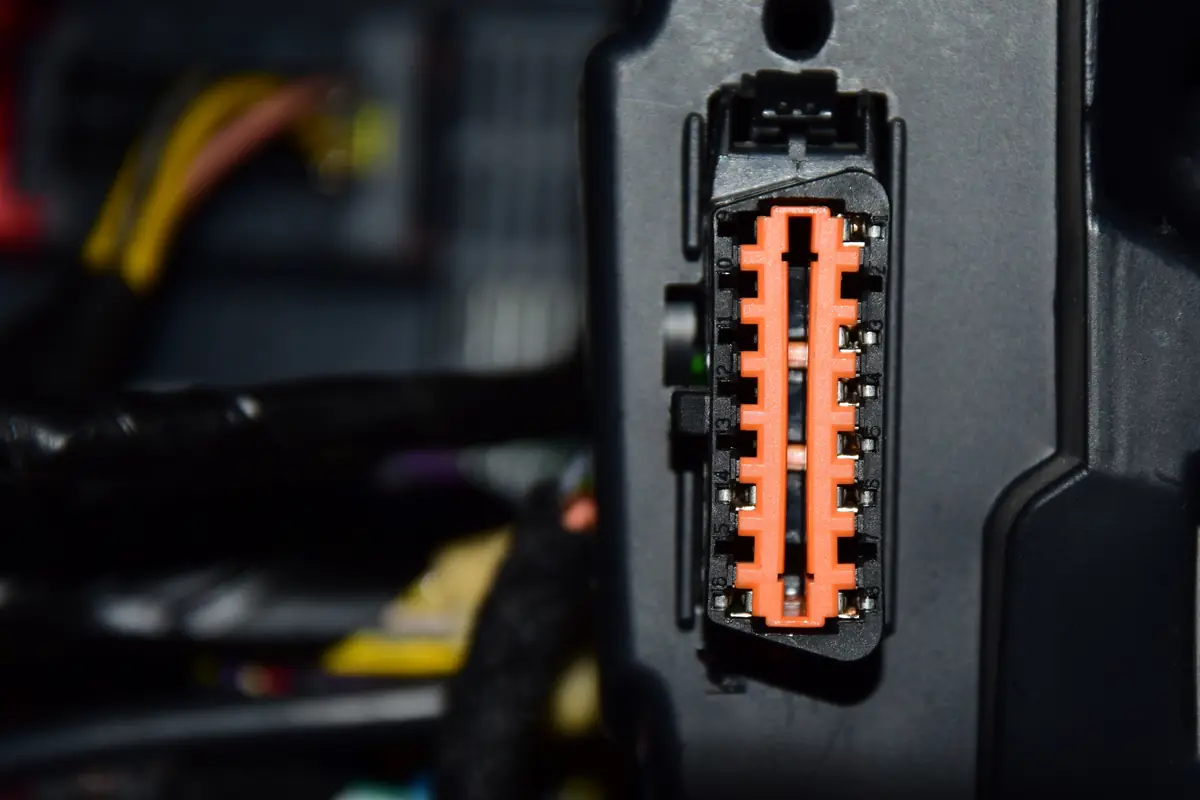
Fig. 3 An OBD-II port, where a scan tool plugs in. Photo: 0x010C, Wikimedia Commons (opens in a new tab), CC BY-SA 4.0 (opens in a new tab), cropped to 3:2 and resized.
The codes follow SAE J2012, a standard from SAE International. It defines the trouble codes that OBD systems must report, and it reserves ranges for each manufacturer’s own codes.11 Its 2016 edition is technically equivalent, with stated exceptions, to the international standard ISO 15031-6:2010.12 The example codes in US rules are a letter followed by four characters. One of them, P0456, stands for a very small leak in the evaporative (EVAP) emission system, which includes the fuel cap.38 EPA guidance treats P0420 to P0439 as catalyst codes.10
Treat a code as a pointer to “the likely area of malfunction”, as the EU definition puts it, not as proof that a part has failed.4 The EPA says a shop should have an OBD scan tool and technicians trained to use it, and should repair the car to the manufacturer’s recommendations.2
The check engine light and emissions inspections
In US areas with an inspection and maintenance (I/M) program, tailpipe tests are mainly for 1995 and older cars. Newer cars usually get an OBD check instead. Each state designs its own program, so the details vary.7
The federal OBD test rules, as of 18 October 2026:
- A car fails if the light is commanded on for one or more trouble codes.13
- It fails if the light does not come on at all with the key on and the engine off.14
- If some monitors have not finished, the owner must drive the car and come back. If they still have not finished, the car fails. A car from model year 2001 or later may pass with one unfinished monitor if nothing else fails.14
Clearing the codes does not fix the fault. EPA guidance lists a disconnected battery among the reasons a car arrives with unfinished monitors. It calls clearing codes just before a test a fraudulent attempt to avoid the program’s requirements.10 Changing the emission controls from their certified setup, or overriding the OBD system, is tampering, which the EPA calls a federal offense.1
In the EU, the periodic roadworthiness test of a Euro 6 gasoline car may read the OBD system instead of measuring the exhaust with a gas analyzer. An OBD read-out that shows a significant malfunction is a major deficiency.15
Do not clear the codes or disconnect the battery to turn the light off. Mazda’s 2025 CX-5 manual warns that disconnecting and reconnecting the battery cables while the light is on could damage the engine and cause a fire.5 Leave misfires, the ignition and the fuel system to a qualified mechanic, as you would brakes, steering, airbags and the high-voltage system of a hybrid or electric car.
What to do when the light comes on
- Note whether the light is steady or flashing, and how the car was driving when it came on. Mazda’s CX-5 manual says to note these driving conditions.5
- If it flashes, keep the trip short, avoid high speed and heavy loads, and get the car to a mechanic as soon as possible.2
- If it is steady, check at your next stop that the fuel cap is on and tight. Always turn the engine off before you refuel.2
- If the light is still on after a few short trips, have the codes read and the car checked by a qualified mechanic.2 In the US, ask whether the emissions warranty covers the repair.8
Keep up with your routine car maintenance too.
Sources
- 1US Environmental Protection Agency (EPA), OBD: frequently asked questions (EPA420-F-02-014, revised September 2012, archived) (opens in a new tab). Accessed .
- 2US Environmental Protection Agency (EPA), Do you drive a 1996 or newer car or light truck? (EPA-420-F-02-016, revised September 2012, archived) (opens in a new tab). Accessed .
- 3US Code of Federal Regulations, 40 CFR 86.1806-17: Onboard diagnostics (opens in a new tab). Accessed .
- 4European Union, Regulation (EC) No 715/2007 on type approval of motor vehicles with respect to emissions (Euro 5 and Euro 6), Article 3 (opens in a new tab). Accessed .
- 5Mazda, 2025 CX-5 owner’s manual: Contact Authorized Mazda Dealer and Have Vehicle Inspected (check engine light) (opens in a new tab). Accessed .
- 6Mazda, 2025 CX-5 owner’s manual: Emission control system (opens in a new tab). Accessed .
- 7US Environmental Protection Agency (EPA), Overview of vehicle inspection and maintenance (I/M) programs (EPA-420-F-21-067, October 2021) (opens in a new tab). Accessed .
- 8US Environmental Protection Agency (EPA), Emissions warranties for 1995 and newer light-duty cars and trucks (EPA-420-F-15-035, October 2015) (opens in a new tab). Accessed .
- 9US Code of Federal Regulations, 40 CFR 85.2103: Emission warranty (opens in a new tab). Accessed .
- 10US Environmental Protection Agency (EPA), Performing on-board diagnostic system checks as part of a vehicle inspection and maintenance program (EPA420-R-01-015, June 2001) (opens in a new tab). Accessed .
- 11SAE International, J2012: Diagnostic trouble code definitions (revised September 2025) (opens in a new tab). Accessed .
- 12SAE International, J2012: Diagnostic trouble code definitions (December 2016 edition) (opens in a new tab). Accessed .
- 13US Code of Federal Regulations, 40 CFR 85.2207: Onboard diagnostic test standards (opens in a new tab). Accessed .
- 14US Code of Federal Regulations, 40 CFR 85.2222: Onboard diagnostic test procedures (opens in a new tab). Accessed .
- 15European Union, Directive 2014/45/EU on periodic roadworthiness tests, Annex I, item 8.2.1.2 (opens in a new tab). Accessed .