What is a hybrid car? How hybrids work
A hybrid car pairs a gas engine with an electric motor and a battery. See how the energy flows, the mild, full and plug-in types, and where the fuel saving comes from.
Researched with AI assistance and checked against the sources below.

A hybrid car has a gasoline engine and one or more electric motors that run on energy stored in a battery.1 A regular hybrid does not plug in. Its battery charges from the engine and from regenerative braking.1 The result is better fuel economy than a similar gas-only car.1
How hybrid cars work
Most hybrids combine three techniques:2
- Regenerative braking. When you coast or brake, the wheels turn the motor, which works as a generator. It makes electricity and helps slow the car.
- Electric assist. The motor adds power when you accelerate, pass or climb. That lets the carmaker fit a smaller, more efficient engine. In some hybrids the motor alone moves the car at low speed, where a gas engine is least efficient.
- Automatic stop-start. The engine shuts off when the car stops and restarts when you press the accelerator, so less energy is wasted idling.
Fuel goes into the engine, which drives the wheels, charges the battery, or both.1 The battery feeds the motor. When you brake, some of the energy flows back from the wheels into the battery instead of turning into heat at the brakes.3
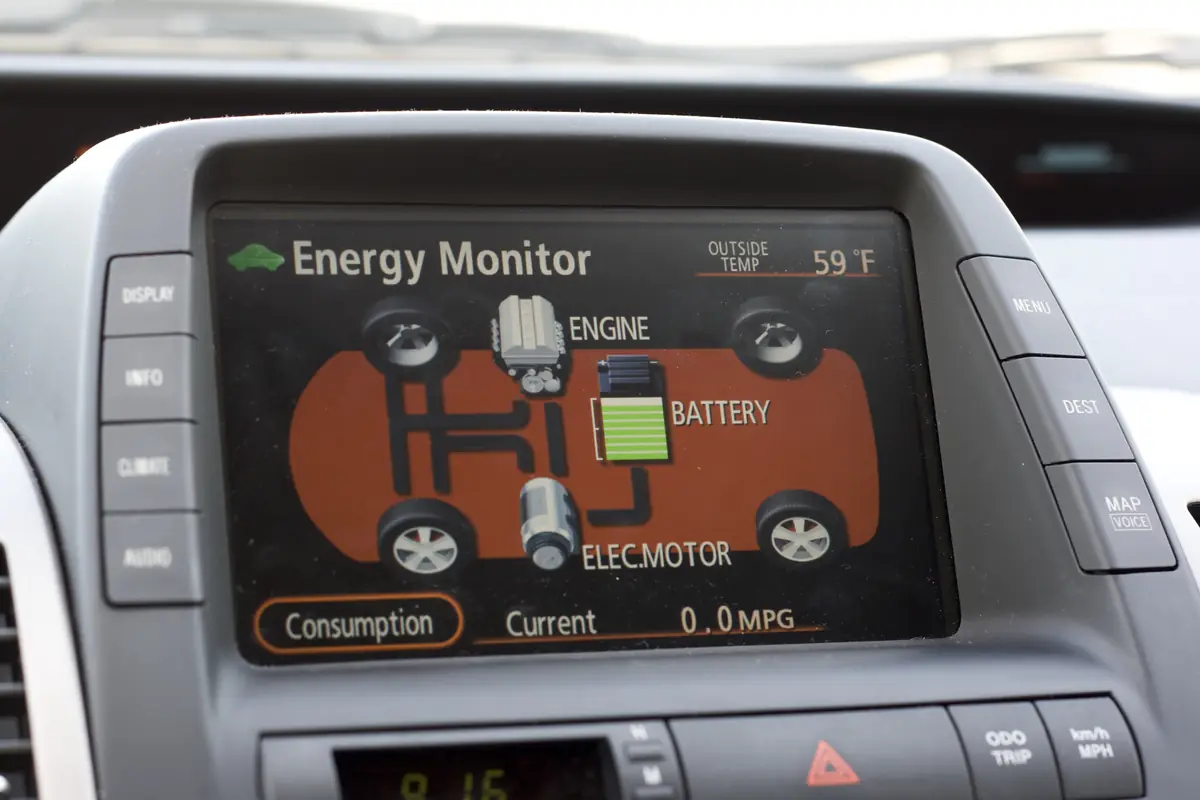
Fig. 1 Prius energy monitor: engine, battery, motor. Photo: Marcin Wichary, Wikimedia Commons (opens in a new tab), CC BY 2.0 (opens in a new tab), cropped to 3:2 and resized.
Where the fuel saving comes from
A hybrid saves the most where a conventional car wastes the most: stop-and-go traffic. In town it recovers braking energy, idles less, and uses the motor at low speed. On the highway, with little braking or idling, a hybrid offers little advantage.3
As of 2026-10-18, the EPA rates the 2026 Toyota Corolla Hybrid LE at 53 mpg in the city, against 32 mpg for the gas-only Corolla LE. On the highway the gap shrinks to 46 against 41 mpg.4 The chart gives combined figures for three pairs that fueleconomy.gov matches as comparably equipped.5
Fig. 2 EPA combined mpg, 2026 models, hybrid and gas-only Source: fueleconomy.gov pairs, as of 2026-10-18.5
The types of hybrid
Mild hybrid
A mild hybrid uses a small battery and motor to help the engine and to shut it off at stops. It cannot drive on electricity alone. It costs less than a full hybrid and saves less fuel.1
Full hybrid
A full hybrid has a larger battery and stronger motors, and can drive on electricity alone for short distances at low speed.1 Carmakers connect the engine and motor in three ways:6
- Parallel. The engine and the motor both drive the wheels through a mechanical link. This is the most common design.1
- Series. The engine only makes electricity, and the motor drives the wheels. This layout is more common in plug-in hybrids.1
- Series-parallel, or power-split. A power split device shares power between the engine, the motor-generators and the wheels in changing combinations. The motor can run on electricity from the engine or from the battery.7
Honda’s e:HEV switches: it works like a series hybrid at low and medium speeds, and like a parallel hybrid when cruising fast.6
Plug-in hybrid
A plug-in hybrid has a larger battery that you charge from an outlet or a charging station. It can store enough electricity to cut gasoline use substantially in typical driving. You do not have to plug it in, but without charging it will not reach its best range or fuel economy.8
Do you plug a hybrid in? Only a plug-in hybrid. Mild and full hybrids have no plug.1
Mild or plug-in? A mild hybrid never moves on electricity alone and never plugs in.1 A plug-in hybrid uses both gasoline and electricity as fuels.9
What “self-charging hybrid” means
Toyota’s UK site calls its hybrids “self-charging”: the battery charges when you brake or coast, and from the engine.10 In 2019, 25 people complained to the UK Advertising Standards Authority (ASA) that Lexus ads calling the UX a “self-charging hybrid” were misleading, because the gas engine does the charging. Toyota (GB), which sells Lexus cars in the UK, replied that the battery relied on energy from the engine as well as from braking. The ASA did not uphold the complaints. It found that buyers would read the term to mean that “the internal mechanics of the car would charge the electric battery”.11
So, as Toyota uses the term, a self-charging hybrid is a full hybrid: it can run on electric power alone at lower speeds,10 and it has no plug.1 Its only outside source of energy is the fuel you put in the tank.1
What happens if the fuel or the battery runs out
Do not count on the battery to get you home on an empty tank. One maker’s manual warns that the hybrid system may stop working while you drive if the tank is empty or either battery is flat. It says not to drive on battery power alone when fuel is low: the high-voltage battery can drain and shut the system off.12 If that happens, slow down gradually, pull off the road somewhere safe, select Park, turn on the hazard lights, and try to restart.12 Check your own manual for your car’s steps.
A hybrid also has a low-voltage battery, as a gas car does. It supplies the power to start the car before the high-voltage battery takes over.13 If it is flat, the hybrid system may not work.12
Servicing and the high-voltage system
A hybrid needs the same general maintenance as a gas car, because it has an engine. The battery, motor and electronics need little scheduled maintenance. The brakes usually last longer, thanks to regenerative braking. Some battery packs have a coolant system that may need regular checks; your owner’s manual or dealer will say.14
The battery, motor and their cables run at high voltage, between 120 and 800 volts across Toyota and Lexus hybrid, plug-in, electric and fuel cell models. The cables are orange. The system may stay charged for up to 10 minutes after the car is switched off.15
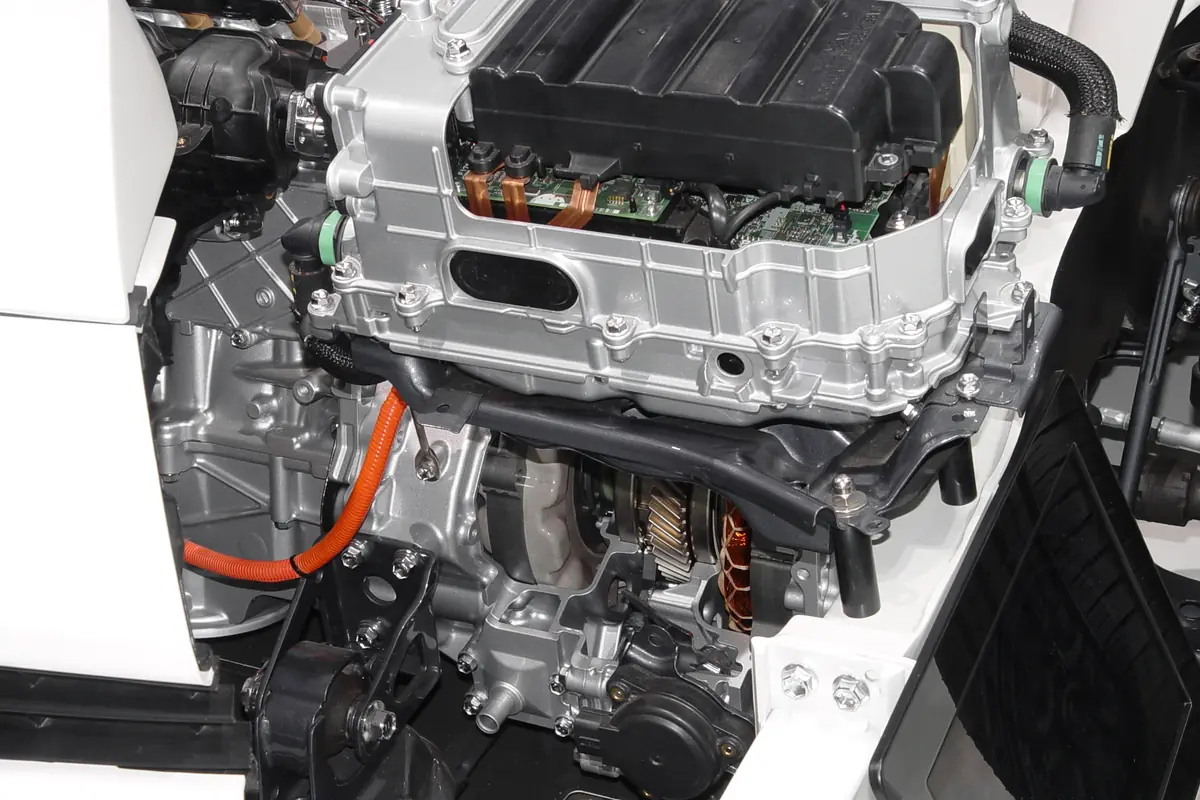
Fig. 3 Orange cable: do not touch; for a qualified technician. Photo: KaiBorgeest, Wikimedia Commons (opens in a new tab), CC BY-SA 4.0 (opens in a new tab), resized.
Never touch or repair the orange cables, the hybrid battery or other high-voltage parts yourself. Like brakes, steering, airbags and fuel systems, high-voltage systems are work for a qualified technician.
Hybrid or electric?
If you are choosing between a hybrid or electric car, also learn how a car with no engine works.
Sources
- 1US Department of Energy, Alternative Fuels Data Center, Hybrid electric vehicles (opens in a new tab). Accessed .
- 2US Department of Energy and EPA, How hybrids work (opens in a new tab). Accessed .
- 3US Department of Energy and EPA, Where the energy goes: hybrids (opens in a new tab). Accessed .
- 4US Department of Energy and EPA, 2026 Toyota Corolla Hybrid and Corolla, side by side (opens in a new tab). Accessed .
- 5US Department of Energy and EPA, Can a hybrid save me money? (fueleconomy.gov comparison tool, MPG estimates updated 2026-09-29) (opens in a new tab). Accessed .
- 6Honda Motor Co., e:HEV, original Honda hybrid system (opens in a new tab). Accessed .
- 7Indus Motor Company (Toyota’s manufacturer in Pakistan), Hybrid technology (opens in a new tab). Accessed .
- 8US Department of Energy and EPA, Plug-in hybrids (opens in a new tab). Accessed .
- 9US Environmental Protection Agency, Electric and plug-in hybrid electric vehicles (opens in a new tab). Accessed .
- 10Toyota (GB), Toyota hybrid cars: self-charging hybrid (opens in a new tab). Accessed .
- 11Advertising Standards Authority (UK), ASA ruling on Toyota (GB) plc, 13 November 2019 (opens in a new tab). Accessed .
- 12Kia, Hybrid owner’s manual (2023, US English): when the hybrid vehicle shuts off (opens in a new tab). Accessed .
- 13US Department of Energy, Alternative Fuels Data Center, How do hybrid electric cars work? (opens in a new tab). Accessed .
- 14US Department of Energy, Alternative Fuels Data Center, Maintenance and safety of electric vehicles (opens in a new tab). Accessed .
- 15Toyota and Lexus, Emergency response guide, edition 2022.05 (ER29E0E) (opens in a new tab). Accessed .