How to buy a used car: a step-by-step guide
Buy a used car in seven steps: shortlist, check recall and title records, inspect, test drive and sign. Official checks for the US, Canada, UK and Australia.
Researched with AI assistance and checked against the sources below.
A used car comes with a past: owners, repairs, perhaps a crash, a flood or a loan that nobody paid off. Most of that past leaves a record. A good buying process reads that record, and gets the car inspected, before any money changes hands.
This guide puts the steps in order and names the official, low-cost checks in the US, Canada, the UK and Australia. Like the rest of the site, it gives general information, not advice: it does not tell you what to pay or how to borrow. For money questions, it points you to the regulator.
The steps at a glance
- Decide what you need and what you can spend.
- Shortlist cars and read each listing closely.
- Check the car’s recall and title record from its vehicle identification number (VIN).
- See the car in daylight and test drive it.
- Pay an independent mechanic to inspect it.
- Know what a dealer owes you, and what a private seller does not.
- Check the paperwork, then pay and register.
The order matters. The early steps cost little, so a car that fails an early check costs you little.
1. Decide what you need
Start with how you will use the car: who rides in it, what you carry, where you park and how far you drive. That decides the size and the fuel type. If you are unsure, first choose a body type.
Then set a total budget. A used car costs more than its price: tax, registration, insurance, fuel, repairs and, if you borrow, interest.1 Online rules of thumb, such as a fixed price said to buy a reliable car, are not advice for you. Prices change, and your costs are your own.
If you plan to borrow, compare loans before you choose a car. The US Federal Trade Commission (FTC) says to compare the annual percentage rate (APR), the loan term and the total cost, not only the monthly payment.1 Each country’s regulator offers free help:
- US: the Consumer Financial Protection Bureau (CFPB) auto loan pages.2
- Canada: the Financial Consumer Agency of Canada guide to financing a car.3
- UK: the Financial Conduct Authority (FCA) Firm Checker. Almost all UK financial firms, lenders and brokers included, must be authorised or registered by the FCA.4
- Australia: the Moneysmart car loan guide from ASIC, the Australian Securities and Investments Commission.5
2. Shortlist cars and read the listings
Compare like with like: the same model, a similar age, similar mileage. Some listings compare the asking price with the car’s original sticker price. That figure describes a new car, so learn the new-car price terms before you weigh it.
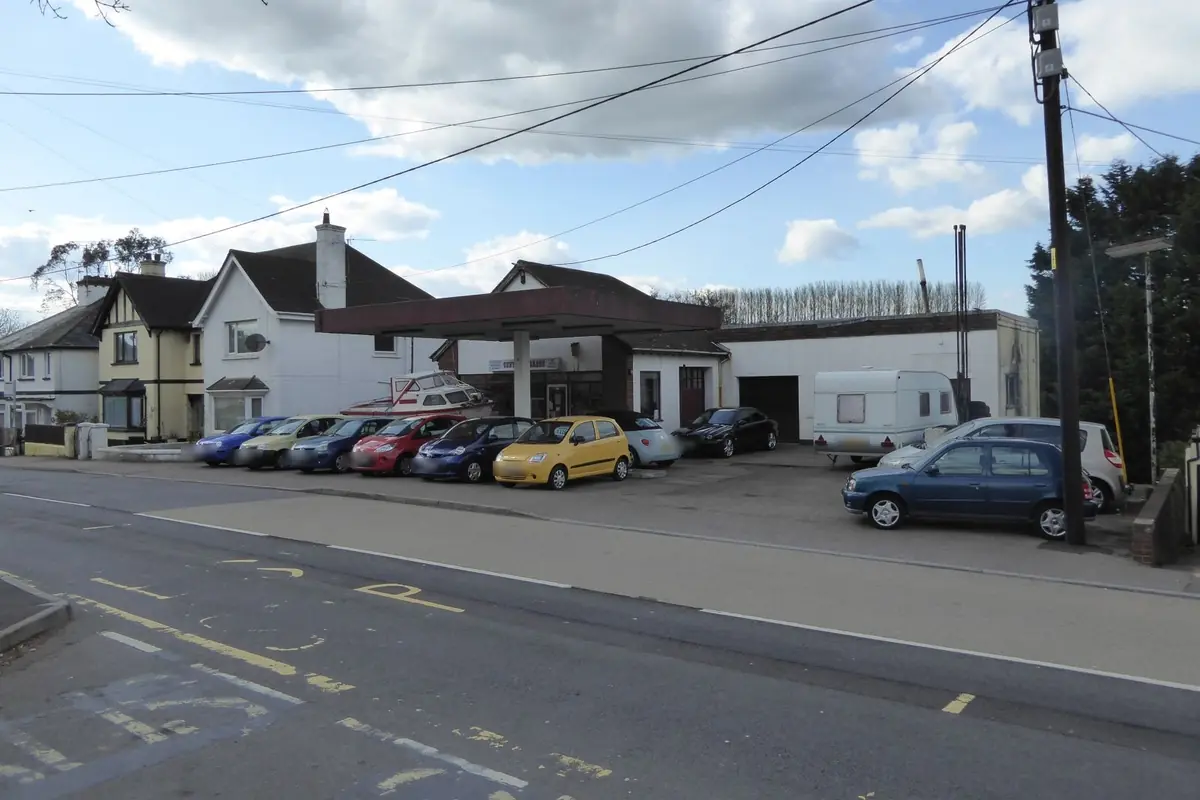
Fig. 1 A small used-car forecourt in England, 2016. Photo: David Smith, Wikimedia Commons (opens in a new tab), CC BY-SA 2.0 (opens in a new tab), number plates blurred, cropped to 3:2 and resized.
Model years and generations. A model year is the year the maker gives a model, which can differ from the calendar year it was built. US rules allow a model year to cover up to 24 months of production.6 Makers also redesign a model every few years. Each design is a generation, and a mid-generation update can change equipment from one model year to the next. Compare listings from the same generation, and check the model year when you look up recalls.
Mileage is one sign of wear, so ask for the service history too. To judge how much mileage is too much, read our guide to how long cars last.
Before you travel to see a car, ask the seller for the VIN. If the seller will not give it, look elsewhere.
3. Check the car’s record before you visit
The VIN is the car’s identity. On US cars it has 17 characters, and you can read it through the windshield at the lower corner on the driver’s side. The 10th character gives the model year.6 The same number is on the registration document.7
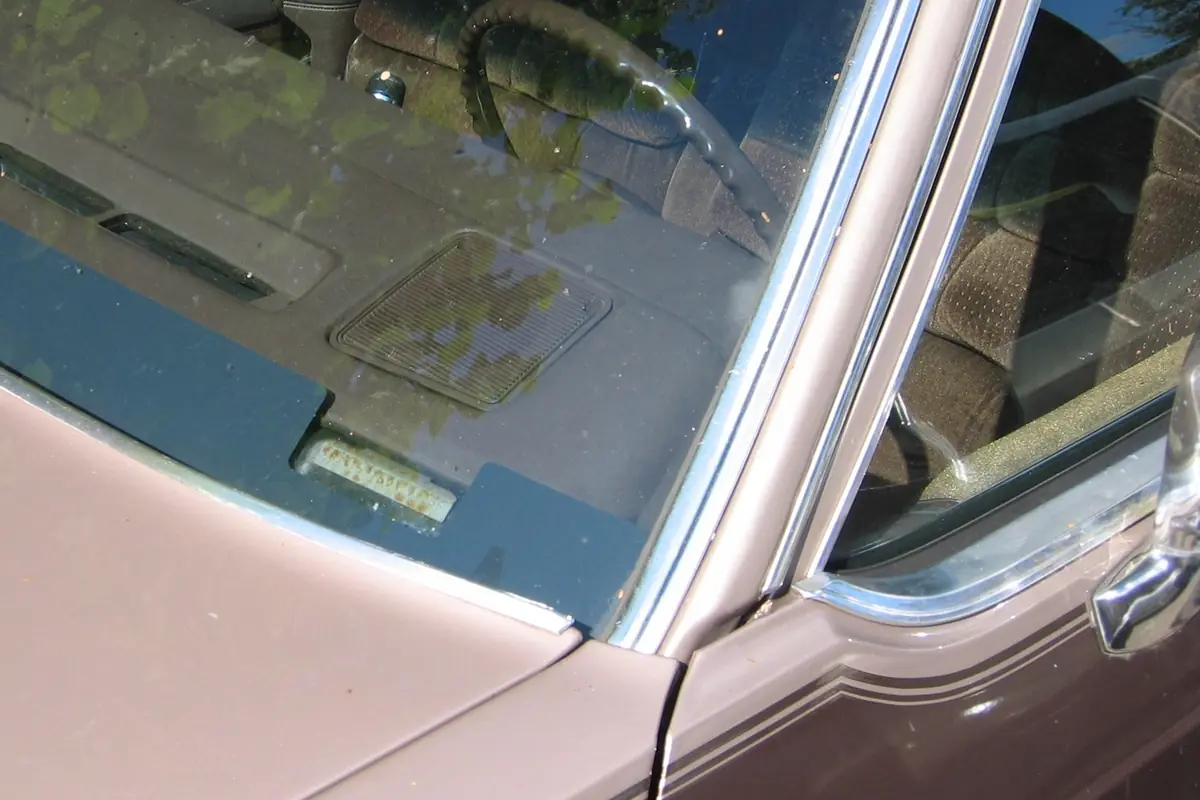
Fig. 2 The VIN plate, read through the windshield. Photo: Hans Haase, Wikimedia Commons (opens in a new tab), CC BY-SA 3.0 (opens in a new tab), cropped to 3:2 and resized.
Recalls
A safety recall is a free remedy that the maker owes when a vehicle has a safety defect or fails a safety standard. The remedy is usually a repair.7 In the US, the National Highway Traffic Safety Administration (NHTSA) lookup shows unrepaired recalls for a VIN or plate. As of October 2026, it does not show recalls more than 15 years old, unless the maker offers more coverage. It also leaves out very recent recalls not yet matched to every VIN, and recalls by some small makers.7
Recalls on older cars are the least likely to be repaired. In NHTSA’s review of recalls launched from 2014 to 2018, owners had repaired about 79% of recalled vehicles five quarters after the fix became available, when the oldest car in the recall was up to 3 years old. When it was 10 years or older, they had repaired about 45%.8
Fig. 3 US recall repair rate by age of the oldest recalled car Source: NHTSA, 2014–2018 recalls, Aug 2021.8
Title, debt and damage history
In the US, the National Motor Vehicle Title Information System (NMVTIS) shows the title, the latest reported odometer reading, any brand such as “salvage” or “flood”, and any insurance total-loss record. You buy the report from an approved data provider that the NMVTIS site lists. The Department of Justice warns that some sources still do not report, so a clean result can be a false negative.9 A private history report may list accidents and flood damage, but no report replaces an inspection.1
| Country | Recall check | Title, debt and history check | Buyer guidance |
|---|---|---|---|
| US | NHTSA lookup by VIN or plate7 | NMVTIS report9 | FTC Used Car Rule10 |
| Canada | Transport Canada recall database; the maker’s site by VIN11 | Provincial records. Ontario sellers must give a Used Vehicle Information Package (UVIP) with lien data12 | Provincial. Ontario: ServiceOntario steps12 |
| UK | GOV.UK recall check by registration13 | GOV.UK MOT history and DVLA details14 | GOV.UK used-vehicle checks15 |
| Australia | Vehicle Recalls site, Australian Government16 | PPSR search: money owing, stolen, written off17 | ACCC consumer guarantees18 |
A Personal Property Securities Register (PPSR) search costs A$2 online, or A$7 by phone, as of October 2026.17 Recheck the fee before you search.
In the UK, the MOT history shows each test result and the mileage at each test since 2005, for cars tested in England, Scotland and Wales.14 A mileage figure that goes down between tests is a reason to ask questions.
4. See the car and test drive it
See the car in daylight, at the seller’s address. Check that the VIN on the car matches the registration document, and that the seller is the registered owner.12 In the UK, GOV.UK also asks you to check that the V5C log book has a “DVL” watermark, and that its serial number is not in the ranges GOV.UK lists as possibly stolen.15
Walk around the car with a checklist. Our guide shows how to inspect the car by eye. On the test drive, use town streets and a faster road. Note any warning light that stays on, any pull to one side, and any noise or vibration. Write down what you find, and give the list to the mechanic.
5. Pay for an independent inspection
The FTC advises a mechanical inspection by an independent mechanic, even on a dealer-certified car. Ask for a written report with the make, model, VIN and repair estimates. If a dealer refuses any independent inspection, the FTC says to consider another dealer.1
The FTC calls an independent inspection a good idea on any used car.1 It matters most when the car is older or has high mileage, and when you buy privately. A repair estimate can change your decision.
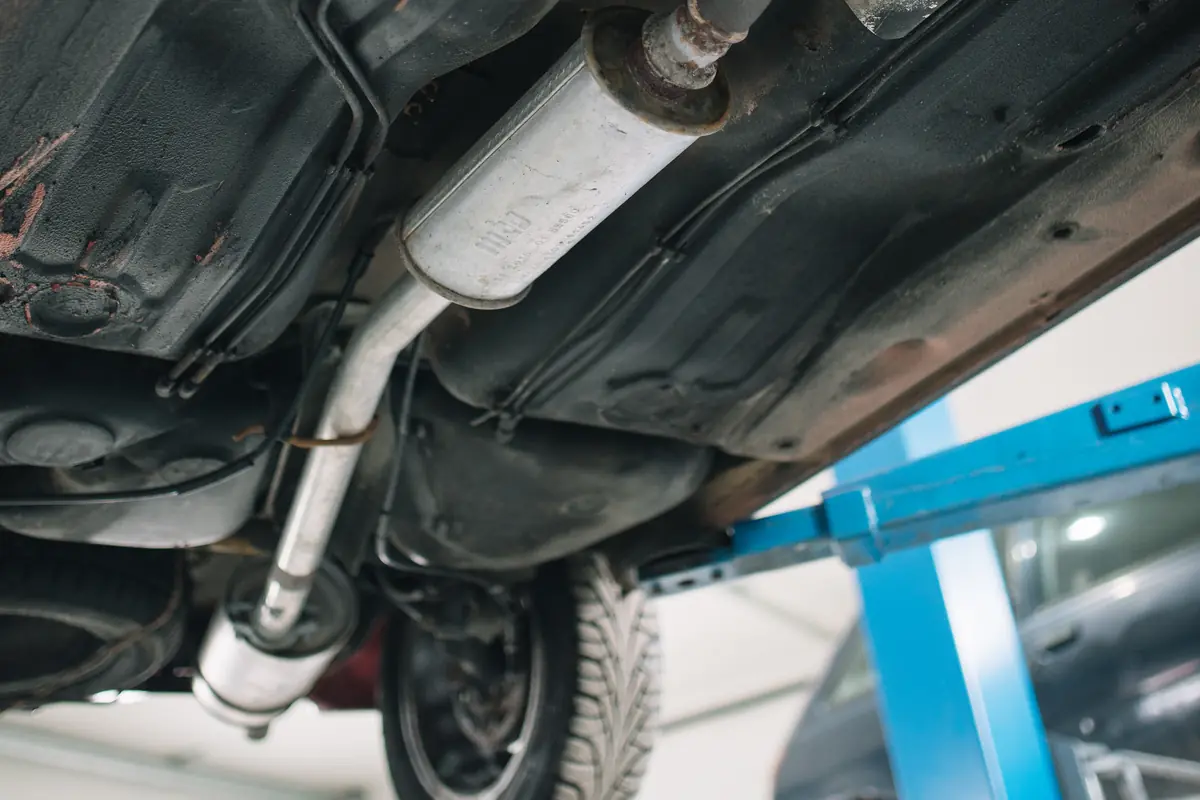
Fig. 4 The underside of a car on a workshop lift. Photo: Shixart1985, Wikimedia Commons (opens in a new tab), CC BY 2.0 (opens in a new tab), cropped to 3:2 and resized.
Leave brakes, steering, airbags, the fuel system, an electric car’s high-voltage system and anything under the car to the mechanic. Do not lift or crawl under a car on a seller’s driveway.
6. Dealer or private seller: what changes
What a seller owes you depends on who the seller is, and on your country.
- US. The FTC Used Car Rule covers dealers: anyone who sold or offered for sale five or more used vehicles in the previous 12 months.10 A dealer must show a Buyers Guide on each car. It states whether the car is sold “as is” or with a warranty, and its terms override the sales contract.10 Federal law does not give you a three-day right to return the car, though some states do. Spoken promises are hard to enforce, so get them written on the Buyers Guide. You can usually buy the car without optional add-ons.1
- Australia. Consumer guarantees apply to cars from a licensed dealer. Most do not apply to private or auction sales.18 If you buy from a licensed dealer, you are generally protected from repossession, even if the car had money owing.17
- Canada and the UK. In Canada, the rules differ by province. In Ontario, for example, the Motor Vehicle Dealers Act gives you rights when you buy from a registered dealer.19 In the UK, the Consumer Rights Act 2015 covers a sale by a trader, such as a dealer, to a consumer. It does not cover a private sale.20 Ask your provincial or national consumer agency before you sign.
7. Check the paperwork, pay and register
Before you pay, read every document and check that it matches the deal you agreed. The CFPB gives the same advice for loan papers.2 Then:
- Run the debt check again. The PPSR advises a search on the day of purchase or the day before.17
- Get a bill of sale. In Ontario it must show the VIN, the price and the date, signed by both of you. You must register the car within 6 days, with proof of insurance.12
- Tax the car at once in the UK. You need the green “new keeper” slip from the log book.15
- Keep the Buyers Guide. A US dealer must give it to you after the sale.10
Red flags at a glance
- The seller refuses an independent inspection,1 or will not give the VIN.
- The VIN on the car does not match the documents.15
- The record shows a salvage or flood brand, a total-loss record, or money owing.917
- A promise that the seller will not put in writing.1
If you see any of these, stop and check before you pay.
Sources
- 1US Federal Trade Commission, Buying a used car from a dealer (opens in a new tab). Accessed .
- 2Consumer Financial Protection Bureau, Auto loans (opens in a new tab). Accessed .
- 3Financial Consumer Agency of Canada, Financing a car (opens in a new tab). Accessed .
- 4Financial Conduct Authority, FCA Firm Checker (opens in a new tab). Accessed .
- 5ASIC Moneysmart, Car loans (opens in a new tab). Accessed .
- 6US Code of Federal Regulations, 49 CFR Part 565, vehicle identification number requirements (opens in a new tab). Accessed .
- 7NHTSA, Check for recalls: vehicle, car seat, tire, equipment (opens in a new tab). Accessed .
- 8NHTSA, Vehicle safety recall completion rates report, report to Congress, August 2021 (opens in a new tab). Accessed .
- 9US Department of Justice, Bureau of Justice Assistance, NMVTIS for consumers (opens in a new tab). Accessed .
- 10US Code of Federal Regulations, 16 CFR Part 455, Used Motor Vehicle Trade Regulation Rule (opens in a new tab). Accessed .
- 11Transport Canada, Stay informed about recalls on vehicles, tires and child car seats (opens in a new tab). Accessed .
- 12Government of Ontario, Buy or sell a used vehicle in Ontario (opens in a new tab). Accessed .
- 13GOV.UK, Check if a vehicle, part or accessory has been recalled (opens in a new tab). Accessed .
- 14GOV.UK, Check the MOT history of a vehicle (opens in a new tab). Accessed .
- 15GOV.UK, Check a used vehicle you’re buying (opens in a new tab). Accessed .
- 16Australian Government, Department of Infrastructure, Vehicle Recalls (opens in a new tab). Accessed .
- 17Australian Financial Security Authority, Do a used car or vehicle search, PPSR (opens in a new tab). Accessed .
- 18Australian Competition and Consumer Commission, New and second-hand cars (opens in a new tab). Accessed .
- 19Government of Ontario, Buying a new or used vehicle: your rights (opens in a new tab). Accessed .
- 20UK legislation, Consumer Rights Act 2015, section 1 (opens in a new tab). Accessed .